Leave Your Message

How to Choose the Right Cam Lock for Your Needs?

Choosing the right Cam Lock starts with the door or panel it must secure. A lock that looks suitable may still have the wrong barrel length, cam shape, or mounting style. Measure the panel thickness and available space before comparing products. A few millimeters can affect how smoothly the cam turns and whether it reaches its frame.

Then consider how the cabinet will be used. A desk drawer, electrical enclosure, and storage cabinet may need different levels of access control and different materials. Check whether the lock will face moisture, dust, frequent handling, or vibration. Zinc-alloy models can suit many indoor applications, while stainless steel may be more appropriate in damp environments. Always confirm the manufacturer’s specifications for the intended setting.

The cam matters, too. Its length and rotation determine whether it engages the frame securely without striking nearby parts. Keyed-alike options can simplify access across several cabinets, but they may not suit every workplace. A cam lock is a practical fastening solution, not a substitute for a high-security locking system. That distinction is easy to overlook.

Before ordering, compare the lock dimensions with the actual installation point, not just the product photo. Check the mounting hole, panel thickness range, key-removal position, and included hardware. If the measurements are uncertain, pause and verify them. That extra check can prevent a poor fit, though product descriptions do not always make every detail obvious.
How to Choose the Right Cam Lock for Your Needs?

Understanding How Cam Locks Work

A cam lock secures a door, drawer, or panel with a rotating metal arm called a cam. A key turns the cylinder, and the cam swings behind a frame or catch. That simple movement holds the panel closed. Small parts matter.

Many cam locks turn about 90 degrees, though some require a different rotation. The correct choice depends on the panel’s thickness, the available space, and the direction the cam must move. Measure the panel before buying. Then check the lock’s body length and cam reach. A cam that is too short may not catch; one that is too long can hit nearby hardware. Also consider whether the lock needs to operate with a key from one side or both. These details are easy to overlook, even when the lock itself seems sturdy.

Tips: Measure twice, including the space behind the panel. Check the cam’s shape and rotation against the existing catch. If replacing a lock, compare the old parts before discarding them.

Installation should feel smooth. If the key binds or the cam scrapes, stop and check alignment rather than forcing it. A slightly uneven panel can change how the cam meets the frame. Lock performance depends on that fit, not just the cylinder. The mechanism is simple, but the measurements deserve a second look.
Identifying Your Application and Security Requirements

A suitable cam lock starts with the job it must do. Identify the panel, cabinet, or access door, then note its material, thickness, and available mounting space. A lock on a lightly used office drawer faces different demands from one on a vibrating equipment cabinet. Measure the existing hole and check the door’s clearance before choosing a cam length or shape. Small details matter. Decide who needs access, how often the lock will be used, and whether keys should be shared or individually controlled.

Security also depends on daily habits, not just hardware. The 2024 Data Breach Investigations Report found that 68% of breaches involved a human element. That figure is not a cam-lock failure rate, but it highlights why access routines deserve attention. Consider how keys will be issued, stored, and replaced if lost. For outdoor or damp locations, check corrosion resistance; for frequent use, ask about cycle testing and suitable materials. A stronger lock may still be a poor choice if staff leave it unlocked.

Tips: Write down the panel thickness, hole diameter, environment, and access needs before comparing options. Test the cam’s throw against the frame; a lock that turns smoothly but barely engages may disappoint. Recheck your assumptions, too—“low risk” can change when equipment or stored items change.

Measuring the Lock and Door or Panel

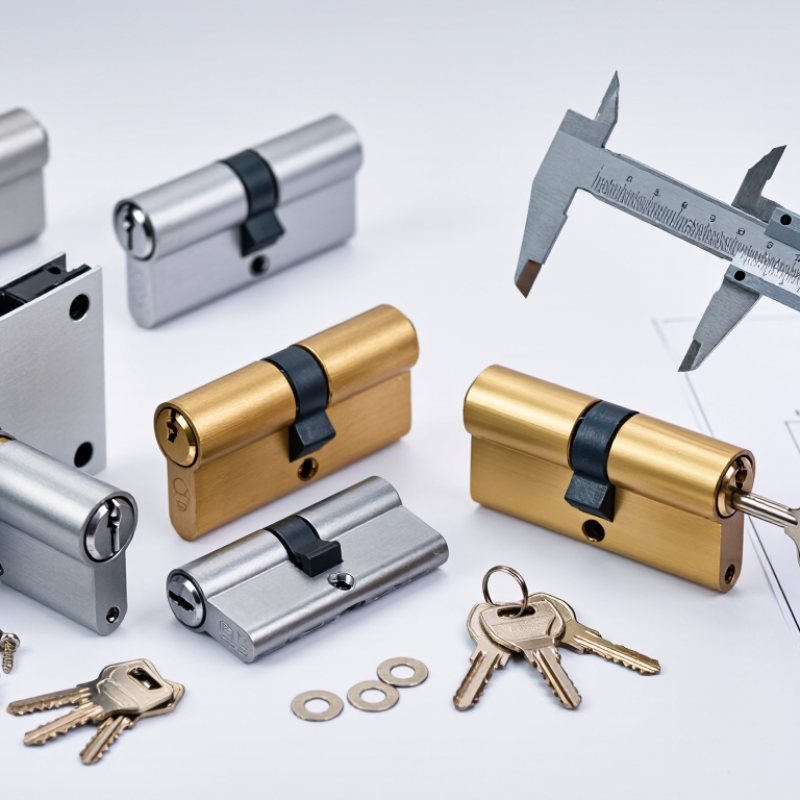
The right cam lock starts with the opening and panel, not the product name. Measure the hole diameter with calipers if available; a ruler can miss small differences. Check the panel thickness at the exact mounting point, including any trim or washer that will sit beneath the nut. Small differences matter. A lock body that is too short may not catch its threads, while an overly long body can interfere with parts behind the panel.

Measure the space behind the door or panel before choosing the body length. Look for wiring, shelves, brackets, or other obstructions. Then note how far the cam must reach to engage the frame or strike. Measure the cam’s length and offset, and check its rotation direction and available swing. A lock may fit the hole but still fail to secure the door if the cam stops short or hits an obstruction. Measure twice.

If replacing an existing lock, remove it and compare its dimensions with the new lock’s specifications. Record the hole diameter, panel thickness, body length, and cam shape rather than relying on memory. I’ve found that the cam’s position can be easy to overlook, especially when the old lock is worn or bent. That detail deserves a second look. If measurements fall between listed ranges, confirm compatibility with the supplier before drilling or enlarging the opening.

Comparing Materials, Keying, and Locking Options

How to Choose the Right Cam Lock for Your Needs?
Comparing Materials, Keying, and Locking Options

A cam lock’s body material matters most where moisture, cleaning chemicals, or frequent handling are expected. Zinc alloy suits many indoor cabinets; stainless steel is a stronger candidate near coastal air or washdown areas. Check the cam, too. A corrosion-resistant body paired with a plain-steel cam can still fail at the moving part. ASTM B117-19 specifies salt-fog testing using a 5% sodium chloride solution at 35°C. Treat this as a comparative corrosion test, not a promise of years in service. Salt spray is not real life.

Keying affects both convenience and exposure. Keyed-alike cylinders let one key open several cabinets, reducing key clutter but increasing the impact of a lost key. Keyed-different options limit access by cabinet, though managing many keys can become awkward. For shared equipment, record who holds each key and how replacements will be controlled. A simple log helps. The best plan is often less convenient than expected.

Choose the locking action to match the door and load. A quarter-turn cam is quick for light-duty panels; a longer cam or multipoint arrangement may better secure wider doors. ANSI/BHMA A156.11 provides a recognized test framework for cabinet locks, so ask suppliers for relevant test documentation rather than relying on appearance. Measure panel thickness, clearance, and cam rotation before ordering. I still double-check the cam’s reach; drawings can hide a few millimeters that matter.

How to Choose the Right Cam Lock for Your Needs? - Comparing Materials, Keying, and Locking Options

Decision Factor Option Typical Characteristics Considerations Often Suitable For
Lock Body Material Zinc alloy Commonly used for economical, general-purpose cam locks; available in many finishes and configurations. Performance depends on the alloy, construction, and finish. Check the manufacturer’s specifications before using it in corrosive or high-load environments. Cabinets, drawers, enclosures, and indoor equipment where moderate-duty use is expected.
Brass Offers useful corrosion resistance in many ordinary environments and is readily machinable. Not all brass grades or lock designs have the same strength or environmental suitability; confirm material details for outdoor or chemical exposure. Indoor cabinets and applications where corrosion resistance and a traditional metal finish are priorities.
Stainless steel Can provide strong corrosion resistance and durability; performance varies by stainless-steel grade and design. Usually costs more than basic materials. Select a suitable grade for the specific moisture, salt, or chemical exposure. Outdoor equipment, humid locations, and installations where corrosion resistance is important.
Carbon steel Can provide a strong body or component when properly designed and manufactured. Unprotected carbon steel can rust. Look for an appropriate coating or finish and maintain it if the finish is damaged. Applications prioritizing strength and value where a protective finish can be maintained.
Keying Keyed differently Each lock has its own key combination, so one lock’s key is not intended to operate the others in the set. More keys may need to be managed when many locks are installed. Multiple users, separate compartments, or installations where access should be divided.
Keyed alike A group of locks is supplied to operate with the same key. A shared key provides convenient access but means that key can operate every lock in the group. One person needing access to several cabinets or compartments.
Master-keyed system Individual keys operate assigned locks, while a designated master key can operate a defined group. Requires a planned key hierarchy and careful control of master keys. Availability depends on the lock system. Facilities with different access levels for staff, maintenance, or management.
Locking and Cam Options Key-retaining The key remains captive in one position, commonly the unlocked position, depending on the lock design. Check which position retains the key; this behavior is not identical across all models. Situations where removing the key can help indicate that the lock has been returned to a required position.
Non-key-retaining The key can generally be removed in both the locked and unlocked positions. Does not by itself indicate whether the lock is locked; users should verify the cam position. General-purpose cabinets where users need to remove the key immediately after operating the lock.
Cam shape and offset Straight, offset, and other cam shapes provide different reach and clearance behind the panel. Match the cam length, offset, and orientation to the cabinet frame and latch point. A suitable fit is essential for reliable engagement. Replacing an existing lock or adapting the lock to a particular door or enclosure layout.
Rotation and operating direction Many cam locks use a quarter-turn action, while rotation direction and available travel vary by model. Confirm the required direction, rotation angle, panel thickness, mounting dimensions, and clearance before ordering. New installations and replacements where the door or latch must operate in a specific direction.

Selection tip: Before choosing a cam lock, check the panel thickness, mounting-hole size, cam reach and offset, required keying plan, and expected exposure to moisture or chemicals. A cam lock is typically intended for controlled access to cabinets or enclosures; choose a lock specifically rated for the security level required.

Checking Compatibility and Installation Requirements

Before choosing a cam lock, measure the panel thickness and the space behind it. The lock barrel must pass through the panel, while its length should allow the cam and retaining nut to fit securely. A barrel that is too short may not engage the nut properly. Too long, and it can leave the cam loose or misaligned. Check the cutout diameter, too; a small mismatch can make installation frustrating. Measure twice. I’ve found that rounded or painted openings can also affect the fit, even when the stated dimensions seem right.

Next, compare the cam’s shape, length, and turning direction with the latch or frame it must engage. Leave enough clearance for the cam to rotate without hitting a shelf, cable, or nearby panel. Confirm whether the lock needs a quarter-turn or another rotation range, and check that its mounting method suits the material and thickness of the door or cabinet. Thin sheet metal may flex under a tight fastener, so a washer or reinforcement may be needed if the lock’s instructions allow it. Installation details are easy to underestimate. I once focused on the barrel length and missed the handle clearance; the lock fitted, but the cam could not turn fully. Check the product dimensions and installation instructions before drilling or enlarging an opening.

How to Choose the Right Cam Lock: Panel Thickness Check

Compare your panel’s measured thickness with the lock’s specified grip range before ordering. The chart shows exact millimeter conversions of common nominal panel thicknesses; actual panels may vary, so measure the material and confirm the lock manufacturer’s specifications.