Rod lock
Leave Your Message
Choosing the right Compression Latch is rarely a simple catalog exercise. Global buyers must compare sealing pressure, panel thickness, vibration resistance, materials, installation space, and service access. A latch that performs well on a laboratory cabinet may fail on a refrigerated truck door. Small differences matter.
“Good latch design begins with the application, not the hardware,” says Michael P. O’Donnell, a senior enclosure-hardware engineer with over two decades of field experience. His observation reflects a common engineering lesson: compression is useful only when it remains stable under real operating conditions. Temperature changes, dust, repeated opening, and uneven panels can expose weaknesses quickly.
This guide reviews ten major types of Compression Latch used across industrial cabinets, transportation equipment, electrical enclosures, outdoor systems, and commercial machinery. It considers quarter-turn models, rotary latches, T-handle designs, lever-operated versions, padlockable options, and electronic alternatives. Each type offers a different balance between security, sealing, ergonomics, and cost.
The comparison is practical. Expect details such as gasket compression, mounting cutouts, grip range, corrosion-resistant finishes, and tool requirements. Some conclusions may remain conditional. Product drawings can look convincing. Field conditions are less polite. A stainless-steel latch may resist corrosion, yet still suffer from poor alignment. A compact design may save space, but frustrate gloved operators.
Global sourcing adds another layer. Buyers should confirm dimensions, testing data, replacement availability, and regional supply support before approval. No single latch suits every enclosure. That is the uncomfortable truth. The best choice is usually the one that matches the door, environment, maintenance routine, and people who use it daily.
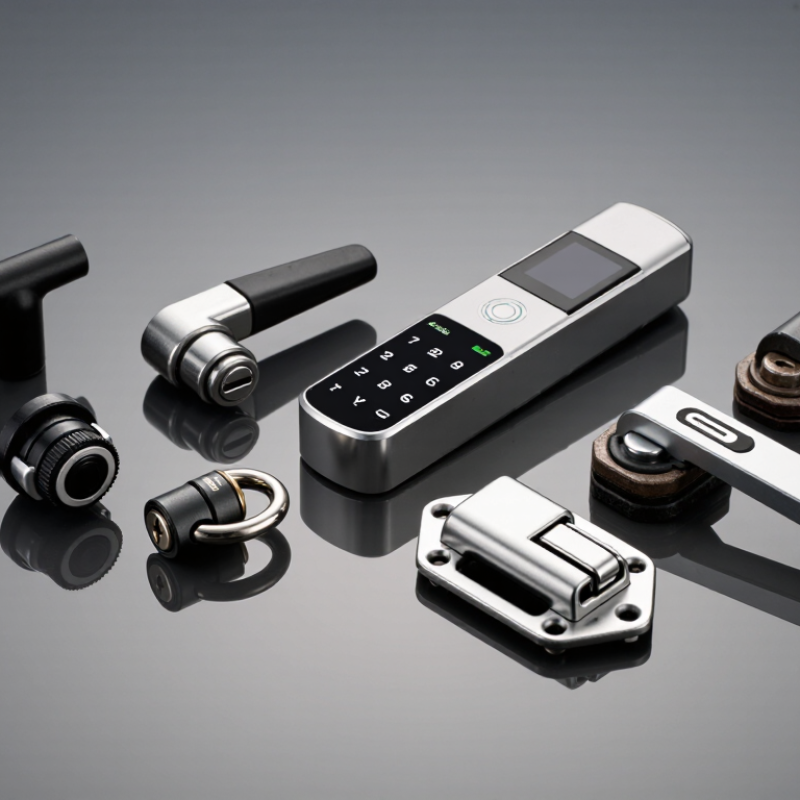
Compression latches are mechanical fasteners that pull a door or panel tightly against its frame. They are common in cabinets, equipment housings, transport cases, and outdoor enclosures. Unlike ordinary latches, they create controlled compression before locking. This action helps reduce movement, rattling, dust entry, and gasket leakage.
A typical compression latch contains a housing, handle, cam, spindle, keeper, and adjustment feature. The housing supports the mechanism through the panel. The handle turns the spindle, while the cam moves behind the keeper. As the handle reaches its closed position, the cam draws the panel inward. The gasket then compresses against the frame. Small adjustments matter. Excessive compression can damage the gasket or distort a thin panel. Insufficient compression may leave a visible gap.
During selection, engineers should check panel thickness, required sealing pressure, corrosion exposure, and operating space. Stainless steel suits harsh environments, while coated alloys can reduce weight. Different cam profiles and locking arrangements support different access needs. Field inspections often find misalignment, not latch failure, causing difficult operation. A practical test is simple: close the panel slowly and observe whether the gasket compresses evenly. It should not twist or buckle. No latch fits every enclosure. Buyers sometimes focus on pull force and overlook installation tolerance. That oversight can create maintenance problems later. Clear drawings, verified dimensions, and repeated cycle testing make the final choice more reliable.
A compression latch is a closure device that first secures a panel and then pulls it tightly against a gasket or mating surface to reduce vibration, rattling, dust ingress, and water penetration. Actual performance depends on the latch design, gasket, installation, materials, and enclosure construction.
| Latch Type | Primary Mechanism | Main Structural Components | Operating Principle | Typical Applications | Key Advantages | Common Limitations |
|---|---|---|---|---|---|---|
| Quarter-Turn Compression Latch | Rotary | Housing, spindle, cam, sealing washer, and operating head or key insert. | A quarter rotation moves the cam behind the frame and draws the panel inward, compressing the gasket during the final part of the movement. | Electrical cabinets, control panels, machine guards, and industrial enclosures. | Compact, fast to operate, and available with locking or tool-operated heads. | Requires correct cam length and alignment; limited adjustment compared with some draw latches. |
| Lift-and-Turn Compression Latch | Rotary / Lift | Front knob or handle, spring-loaded spindle, cam, housing, and gasket interface. | The operator lifts or releases the handle before turning it; the cam then rotates into the keeper and pulls the panel against the seal. | Access doors, outdoor enclosures, cabinets, and equipment covers requiring controlled access. | Good visual indication of the open or closed position and reliable gasket compression. | Needs adequate clearance for the lifting motion and correct installation depth. |
| Over-Center Draw Latch | Lever / Toggle | Lever, pivot links, catch or keeper, base plate, and adjustable hook or loop. | The lever pulls the hook toward the keeper and passes over center, creating tension that holds the two panels together. | Transport cases, machinery covers, tooling fixtures, and removable panels. | High clamping force, quick release, and useful adjustment through the hook length. | Can release under severe shock if not properly over-centered or safety-secured. |
| T-Handle Compression Latch | Handle / Cam | Rotating T-handle, spindle, cam, housing, escutcheon, and optional lock cylinder. | Turning the T-handle rotates a cam behind the frame; continued rotation draws the door or cover toward the gasket. | Vehicle bodies, generator housings, industrial cabinets, and large access doors. | Good hand leverage, easy operation with gloves, and suitability for larger panels. | Requires more front-panel space and may protrude unless a recessed design is used. |
| Paddle-Style Compression Latch | Recessed Handle | Recessed paddle, spring mechanism, spindle, cam, housing, and mounting bezel. | Pressing or lifting the paddle releases the latch; the internal cam retracts or rotates to allow the panel to open and then compresses the seal when closed. | Server cabinets, vehicle compartments, electrical enclosures, and machine doors. | Low-profile surface, reduced snag risk, and convenient one-hand operation. | More components and a larger cutout can increase installation complexity. |
| Hook Compression Latch | Hook / Lever | Hook, pivoting lever, keeper, base, and sometimes an adjustable threaded section. | The hook engages a keeper on the opposite panel; lever movement pulls the hook into tension and compresses the gasket or joint. | Removable covers, inspection doors, filters, cabinets, and access panels with flexible alignment. | Accommodates panel movement and can provide strong pull-down force. | Requires sufficient clearance for hook engagement and may expose moving parts. |
| Push-to-Close Compression Latch | Push / Snap | Spring-loaded plunger or rotor, catch, housing, and mounting hardware. | Pressing the panel engages the catch; an internal spring or cam mechanism holds the panel closed and maintains pressure against the seal. | Light-duty equipment doors, furniture-grade enclosures, access covers, and interior panels. | Fast tool-free operation and a clean exterior appearance. | Generally offers less holding force and adjustability than heavy-duty draw mechanisms. |
| Slam-Action Compression Latch | Automatic Catch | Spring-loaded pawl or bolt, striker, housing, release handle, and compression stop. | Closing the panel drives the striker into the latch, which automatically captures it; the mechanism retains the panel under spring or cam-assisted compression. | Frequent-access equipment doors, service compartments, vehicle bodies, and industrial machinery. | Automatic engagement saves time and is convenient where doors are repeatedly opened. | Needs precise striker alignment and may require a separate safety lock in high-vibration environments. |
| Adjustable Compression Latch | Variable-Set | Threaded spindle or hook, locknut, lever or knob, cam or keeper, and mounting body. | The adjustable element changes the draw length or closed position, allowing the operator to set the required gasket compression after installation. | Enclosures with variable panel thickness, replacement seals, and assemblies requiring field adjustment. | Compensates for tolerance changes, gasket wear, and different panel configurations. | Incorrect adjustment can over-compress the gasket or leave insufficient holding tension. |
| Cam-Action Compression Latch | Cam Mechanism | Cam plate or eccentric, spindle, housing, handle or tool interface, and strike surface. | Rotating the eccentric cam creates a short linear draw at the end of the rotation, pulling the panel tightly against the frame. | Industrial access panels, machine covers, instrumentation cabinets, and compact control boxes. | Simple construction, positive final compression, and flexible cam geometry. | Performance depends strongly on cam profile, engagement depth, and accurate panel alignment. |
Buyer selection note: Before specifying a compression latch, verify panel thickness, gasket type and thickness, required draw distance, operating clearance, corrosion environment, security level, vibration exposure, mounting method, and the required ingress-protection performance of the complete enclosure assembly.