Leave Your Message

7 Pull Lock Buying Tips for Global Buyers

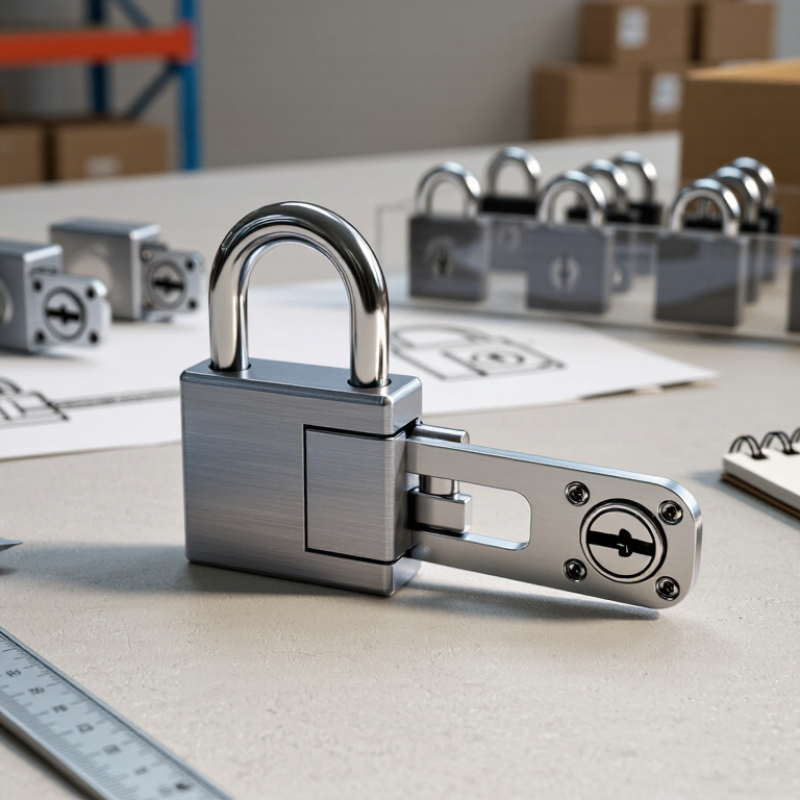
A Pull Lock can look simple on a product page: a compact body, a sliding latch, and a clean metal finish. Yet small differences in dimensions, spring tension, and installation clearance can decide whether it works smoothly in daily use. Global buyers need more than a low unit price. They need specifications they can verify, samples they can test, and suppliers who answer precise questions.

“Measure the fit, test the action, and verify the finish before committing to volume.” This is an original illustrative quotation, not a verified statement, offered under the fictional name of Pull Lock sourcing specialist Alex Morgan. Use it as a practical reminder, not as an industry endorsement. A careful review should compare lock dimensions, mounting points, material, surface treatment, operating feel, and packaging. Ask for clear drawings and inspect a physical sample against the intended application. Test the latch repeatedly. Check for rough edges, loose movement, or a finish that marks too easily. Small defects matter.

The seven buying tips ahead help buyers assess product fit, supplier communication, quality checks, customization, lead times, packing, and after-sales support. Keep records of agreed specifications. Confirm details in writing. A sample may differ from bulk production; that risk deserves attention, not optimism. No checklist can replace hands-on inspection, but a disciplined process can make surprises less likely. Pull Lock sourcing is often decided by details that are easy to overlook. A little skepticism helps.
7 Pull Lock Buying Tips for Global Buyers

Understanding Pull Locks and Their Common Applications

A pull lock combines a hand grip with a locking mechanism, often a keyed cam that turns behind a cabinet frame. Pulling the handle opens the door or drawer when unlocked; turning the key secures it. Common uses include office cabinets, filing drawers, lockers, tool chests, display cases, and electrical enclosures. Small details matter. Door thickness, frame clearance, and mounting-hole spacing affect fit. A lock that turns smoothly on a sample may bind once installed against a misaligned frame.

The application shapes the choice. Filing drawers may need controlled access, while a workshop tool chest benefits from a sturdy cam and a handle that remains comfortable with gloved hands. Enclosures may require materials suited to moisture, dust, or frequent handling. Grand View Research estimated the global furniture market at USD 556.3 billion in 2023. That figure describes the broader furniture market, not pull-lock sales, but it shows the scale of products where cabinet hardware is used. Still, a market-size figure cannot tell buyers which lock will perform well. Check the actual panel dimensions, opening direction, operating frequency, and finish before ordering; product descriptions sometimes leave these details unclear.
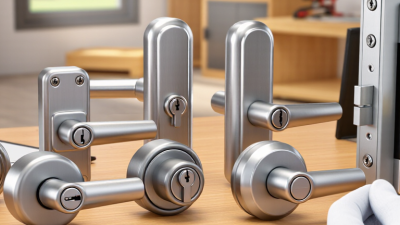
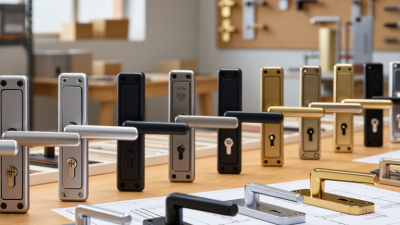
Identifying the Right Lock Type for Each Use

A lock should match the door, traffic, and threat—not just the pull handle. For a timber entry door, a deadbolt paired with a compatible pull handle offers a simple, robust setup. Busy commercial doors may need a mortise lock, which combines the latch and locking mechanism inside the door edge. Check door thickness, backset, and handing before ordering. Small measurement errors cause costly fitting problems.

For cabinets and lockers, cam locks suit thin panels and short-turn operation. Sliding doors need hook-style locks that engage the frame, while glass doors often require purpose-designed patch locks to avoid drilling the glass. For exterior gates or storage, choose a weather-resistant padlock and confirm the shackle clears the hasp. Fit matters. A stronger lock can still fail when its strike plate or frame is weak.

Use test data to compare duty levels. ANSI/BHMA A156.2, the industry standard for bored locks, sets endurance benchmarks of 1 million cycles for Grade 1, 400,000 for Grade 2, and 200,000 for Grade 3. These figures apply to that lock category, not every lock type. Match the grade to expected traffic, then verify the full product’s test documentation. A lower grade may be adequate for a quiet interior door. It may not be adequate for a frequently used entrance. That distinction is easy to overlook.

Comparing Materials, Finishes, and Security Features

Material and finish should be judged together. Stainless steel suits damp entryways better than ordinary steel, while brass offers a solid feel but may tarnish. Zinc-alloy bodies can reduce cost, yet thin cast sections may wear around screws. A polished coating can look durable under showroom lights and still scratch at a busy doorway. I would compare the base metal, coating process, and stated corrosion test—not just the color. Finish is not armor.

Security needs more than a heavy-looking pull. The FBI’s 2023 Crime Data Explorer recorded an estimated 847,522 burglaries in the United States, a reminder to inspect the complete locking assembly. Check bolt engagement, cylinder protection, strike-plate fixing, and whether the pull can be forced away from the door. For covered bored locks, ANSI/BHMA A156.2 grades include cycle tests of 200,000, 400,000, and 1,000,000 cycles. A high cycle rating does not, by itself, prove resistance to forced entry.

Tips: Request the material specification and finish-test results. Match the lock to the door thickness and exposure. Ask which security tests were performed, and check the exact model’s certificate. Don’t assume a shiny finish means long service life; that is an easy detail to overlook. Verify replacement parts and installation measurements before ordering samples.

7 Pull Lock Buying Tips for Global Buyers - Comparing Materials, Finishes, and Security Features

Buying tip Options to compare What to verify Practical trade-off
1. Choose the material for the environment 304 stainless steel; 316 stainless steel; zinc alloy; brass Confirm the base material and grade, not just the surface appearance. For coastal or chloride-exposed locations, ask whether 316 stainless steel is suitable for the application. 316 stainless generally offers better resistance to chloride corrosion than 304, while zinc alloy can be a cost-conscious choice for less demanding environments. Actual performance depends on design, exposure, and maintenance.
2. Match the finish to exposure and upkeep Brushed stainless; polished chrome plating; powder coating; PVD coating Request the finish specification, cleaning guidance, and any applicable corrosion or wear test results. Check whether the finish covers exposed edges and fixing areas. Brushed surfaces can make minor marks less noticeable; plated and coated finishes offer different appearance and protection. Durability varies with the substrate, preparation, coating process, and use.
3. Confirm the lock type and keying plan Keyed cylinder; keyed-alike group; master-key system; keyless option where available Clarify the cylinder format, number of keys, keying requirements, replacement-key process, and whether key control is needed for the project. Keyed-alike locks simplify access across multiple doors, while separate keys can limit access by location. Keying arrangements should be agreed before production.
4. Check the security features and evidence Cylinder design; anti-drill or anti-pick features; deadlocking function; tested lock assembly Ask which features are present and request independent test documentation for the complete lock and its intended use. Check the relevant local or project-required standard. A listed feature alone does not establish a security level. Ratings and test standards differ by market, and performance depends on the full installed assembly.
5. Match dimensions to the door Door thickness; backset; cut-out or bore size; handing; pull clearance Obtain a dimensioned drawing and confirm the door construction, lock position, opening direction, and available clearance before ordering. Matching dimensions helps avoid rework and installation delays. Do not assume that dimensions or handing are universal across suppliers or markets.
6. Evaluate mounting and the surrounding hardware Through-bolts; fixing screws; reinforcement; compatible strike or keep Check the fixing method, fastener material, door substrate, and compatibility of the strike or keep. Follow the installation instructions for the specified door type. The lock’s performance depends on its installation and supporting door and frame. Stronger hardware cannot compensate for an unsuitable substrate or incorrect fitting.
7. Review environmental testing and maintenance Corrosion testing; operating-cycle testing; cleaning and lubrication instructions Request test method and results, such as salt-spray testing where relevant, and confirm recommended maintenance and compatible cleaning products. Test results help compare products under defined conditions, but salt-spray hours do not directly predict service life in every real-world environment.

Checking Dimensions, Standards, and Installation Requirements

Before ordering a pull lock, measure the door leaf, stile width, thickness, backset, and bore center from finished surfaces. Check the installation template against existing holes; even a small mismatch can leave the escutcheon crooked. Measure twice. Record door handing, latch direction, and clearance from nearby trim. Ask the installer to confirm spindle length and fixing access before production. A useful detail: photograph the door edge beside a ruler, not just the front face. I still recheck this step; site drawings can be outdated.

For accessible installations, the U.S. Access Board’s 2010 ADA Standards specify a minimum 32-inch clear door opening. They also place operable hardware 34 to 48 inches above the finished floor and limit operable-part force to 5 pounds. See Sections 404.2.3, 404.2.7, and 309.4. Confirm that the selected pull lock can be operated without tight grasping, pinching, or wrist twisting. Then check the destination market’s applicable requirements and the manufacturer’s test documentation. ANSI/BHMA A156.2 is one recognized reference for lock performance, but its scope may not match every pull-lock design. Ask for written confirmation of the tested model, door thickness range, and fixing method. Small omissions here can mean drilling twice.

Evaluating Suppliers, Pricing, and After-Sales Support

When evaluating pull lock suppliers, request a sample that matches your intended panel thickness and installation method. Check the handle’s clearance, latch movement, and finish under ordinary workshop lighting. Ask for dimensional drawings, material details, and relevant test records. A polished sample is useful, but it cannot show how consistently every production batch will perform. Small details matter.

Compare quotations line by line. Include tooling or sample fees, minimum order quantities, packaging, shipping, and spare parts. Ask how lead times change during busy periods, and whether quoted prices remain valid for a stated period. A low quote can feel like a clear win; buyers may still give it too much weight. I find landed cost easier to overlook than unit price. Ask for evidence.

After-sales support deserves the same scrutiny as the lock itself. Confirm the warranty period, exclusions, and process for reporting defects. Ask who pays for replacement parts and how quickly the supplier usually responds. Clear installation instructions and traceable batch information can save time when a fitting does not sit properly. Keep the answers in writing. Even a capable supplier may communicate poorly once an order ships, so test responsiveness before committing to a large quantity.