A Compression Latch may look like a small fitting, but it controls how a panel closes, seals, and stays secure. For global buyers, the right choice depends on more than price. Panel thickness, required compression, operating space, material, finish, and expected service life all matter. A latch that feels solid in a sample can still disappoint if its cam misses the frame or its handle is awkward to reach. Small details count.
This guide covers seven practical buying checks, from measuring the panel to comparing installation and maintenance needs. It also looks at supplier documentation, sample testing, and clear communication across time zones. Test the real assembly. A cardboard drawing cannot reveal every clearance issue. Before publication, add a quotation verified with a named Compression Latch industry expert; no sourced expert name or statement was supplied for this article, so inventing one would undermine its reliability. A useful buying principle remains: match the latch to the panel and operating conditions, not just the catalog photograph. There is no perfect choice for every enclosure. Even careful buyers can miss a detail, so confirm dimensions and performance requirements with the supplier before placing a large order.
Start with the duty cycle: how often will the latch open and close during normal use? A service panel checked daily needs a different cycle life than an enclosure opened twice a year. Compare expected use with the manufacturer’s stated test data, and allow for peak periods. Ratings are useful, but the actual environment can be less tidy.
Next, define operating load. Include gasket compression, panel movement, and any force needed to keep the door seated. Do not treat a latch’s holding capacity as its operating load. Small details matter. A stiff seal can make a seemingly suitable latch awkward to close, while vibration may loosen a lightly loaded panel. If possible, test a sample on the real assembly.
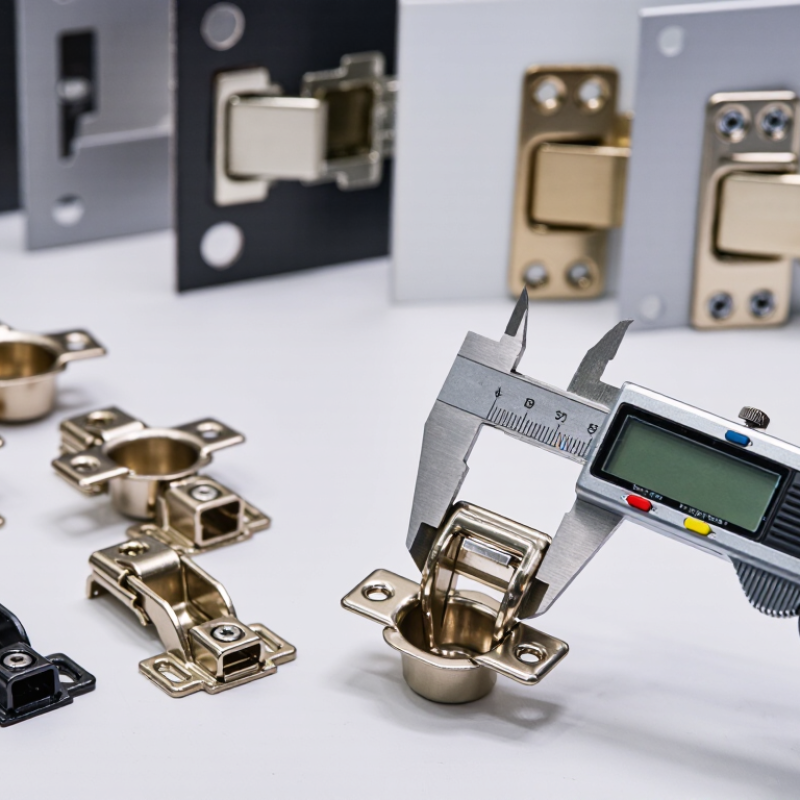
Measure panel thickness at the mounting point, including coatings or bonded layers that affect the fit. Then confirm the required grip range: the total thickness the latch must clamp across, including the door, frame, and compressed gasket. Keep tolerances in mind; nominal dimensions can hide a poor fit. A quick physical check is worthwhile. It may reveal that your first measurement was wrong.

A compression latch helps pull a door evenly against its gasket, but the IP rating applies to the complete enclosure. Under IEC 60529, IP66 means dust-tight protection and resistance to powerful water jets. The standard’s IPX6 test specifies a 12.5 mm nozzle, about 100 L/min water flow, and a 2.5–3 m distance. Exposure lasts at least three minutes, with longer testing for larger surfaces. That matters.
For buyers, match the rating to the actual washdown or outdoor conditions. IP66 does not mean protection against immersion. A latch may compress the seal unevenly if the door is warped, the gasket is too soft, or installation varies. Check the maker’s test documentation for the assembled enclosure, not just the latch component. This detail is easy to overlook.
Tip: Confirm gasket material, compression range, door flatness, and mounting torque. Then inspect corners and cable entries, where water can find a path. Ask whether testing covered repeated opening and closing; a fresh seal may perform differently after wear. I would not rely on a firm-feeling handle alone. Verify the rating against IEC 60529 test evidence and your application’s exposure.
For compression latches, a corrosion claim is only useful when the test method and conditions are clear. ASTM B117 and ISO 9227 describe salt-spray testing, not a direct forecast of years in service. ISO 9227:2022 specifies neutral salt spray using a 50 ± 5 g/L sodium chloride solution, typically at 35°C. ASTM B117 likewise uses a controlled salt-fog chamber. Compare like with like: a 500-hour result under one method cannot automatically be ranked against a result from another method. Test hours are not outdoor years.
Ask for the full report, not just a sales-sheet number. Check the standard and edition, exposure duration, specimen preparation, coating type, and pass/fail criteria. For a latch, confirm whether the report tested the complete assembly or only a flat coated coupon. Look for observations around the handle, spring, rivets, and cut edges, where coating damage or trapped moisture may matter. A report that records red rust or blistering at defined intervals is more informative than “passed” alone. Still, chamber tests cannot reproduce every mix of rain, salt, abrasion, and maintenance. I would treat a strong result as useful evidence, not a guarantee.
Cam geometry decides whether a latch pulls a panel tight or merely catches its edge. Match cam reach and hook depth to panel thickness, seal compression, and clearance behind the frame. A short cam may leave a gasket loose; an overly long one can scrape the frame or demand too much closing force. Check the rotation path with the panel installed, not just on a workbench. Small details matter. A bench fit can mislead, and this check is easy to skip.
Choose materials and finishes for the actual exposure: indoor humidity, washdown, salt spray, or outdoor grime. NACE International’s 2016 IMPACT study estimated corrosion costs at US$2.5 trillion annually, about 3.4% of global GDP. That broad figure is not a latch-specific estimate, but it shows why corrosion control deserves attention. For chloride exposure, assess stainless grade, coating durability, and contact with dissimilar metals; no finish is universally best. Ask suppliers for material specifications and relevant test results. ISO 9227 defines salt-spray test methods, but a test duration alone does not predict service life in every installation. Compare test conditions with the real environment, and inspect edges, cutouts, and moving contact points where coating damage may start.
| Buying tip | What to check | Practical selection guidance | Information to confirm with the supplier |
|---|---|---|---|
| 1. Match the cam geometry | Cam length, offset, shape, rotation direction, and contact point against the frame or keeper. | Check the latch drawing and installation dimensions. The cam must clear the frame while providing enough engagement to retain the door or panel. | Cam dimensions, rotation angle, available cam styles, and a drawing showing the latch’s closed position. |
| 2. Verify compression and grip range | Required compression, panel thickness, gasket thickness, and the distance between the latch mounting surface and keeper. | Choose a model whose stated grip range fits the assembled panel and seal. Do not assume that a latch will compress a gasket adequately without checking its specified travel. | Grip range, compression travel, panel cutout dimensions, and any installation limits. |
| 3. Select materials for the environment | Exposure to moisture, salt, cleaning chemicals, temperature changes, and outdoor or marine conditions. | Compare the latch body, cam, spindle, and fasteners separately. Stainless steel may suit many corrosive environments, while coated steel or zinc-alloy options may suit less demanding service; suitability depends on exposure and design. | Material grades, material specifications for each component, and any available corrosion-test information. |
| 4. Specify an appropriate finish | Coating type, surface preparation, color requirements, and compatibility with the operating environment. | Use a finish suited to the expected exposure. A decorative or general-purpose coating should not be assumed to provide protection in salt spray, chemical, or continuously wet conditions. | Finish description, coating thickness if specified, test method and duration where applicable, and care instructions. |
| 5. Check sealing and ingress needs | Whether the installation needs protection from dust, water, washdown, or weather. | Confirm the complete assembled product’s ingress-protection rating, if one is required. Sealing performance can depend on the gasket, panel, mounting method, and installation conditions. | Applicable IP rating and test basis, required gasket, and installation instructions for maintaining the seal. |
| 6. Choose the operating and security features | Handle or tool operation, keyed or non-keyed access, vibration exposure, and required opening frequency. | Select an operating style that users can access safely and that suits the application. For vibration-prone equipment, ask whether a secondary retention feature is available and appropriate. | Available operating styles, keying options, vibration-related features, and any stated operating-cycle data. |
| 7. Confirm global order and installation details | Mounting orientation, cutout tolerances, fasteners, documentation, packaging, and shipment requirements. | Review a sample or dimensioned drawing before placing a large order. Confirm that installation instructions and required product documentation are available for the destination market. | Current drawings, installation instructions, order quantities, lead time, packaging details, and applicable conformity documents. |
A compression latch can look identical across shipments, yet its materials may change without notice. Verify RoHS Directive 2011/65/EU compliance for the complete latch, including its housing, spring, plating, fasteners, and seals. Request a dated declaration and supporting test reports that identify the product or material scope. Check whether any claimed exemption applies to the specific part and use. A report for a similar model is not enough.
Keep records current. RoHS requirements and exemptions can change, so confirm the applicable version and destination-market expectations with your compliance team. For REACH Regulation (EC) No 1907/2006, ask suppliers to screen materials against the current Candidate List of substances of very high concern. If a listed substance exceeds 0.1% by weight in an article, communication duties may apply. “REACH compliant” alone says little; request substance-level information and clear product identification. A small coating change can matter. Keep supplier declarations, revision dates, and follow-up emails together. It is easy to assume a familiar latch has unchanged materials, but that assumption deserves a second look.
Verify compliance with RoHS Directive 2011/65/EU and REACH Regulation (EC) No 1907/2006.
Limits shown are maximum concentrations by weight in homogeneous materials. RoHS exemptions may apply to specific uses.
REACH note: Under REACH Article 33, communication duties apply when a Candidate List SVHC is present in an article above 0.1% weight by weight. This is not a general safe-use limit.