How to Choose the Right Pull Lock for Global Sourcing?
Choosing the right Pull Lock for global sourcing requires more than comparing unit prices. A lock that looks identical in a supplier photograph may differ in alloy grade, spring strength, corrosion resistance, tooling accuracy, and tested load capacity. These details become critical when products face salt air, repeated opening, vibration, or temperature changes.
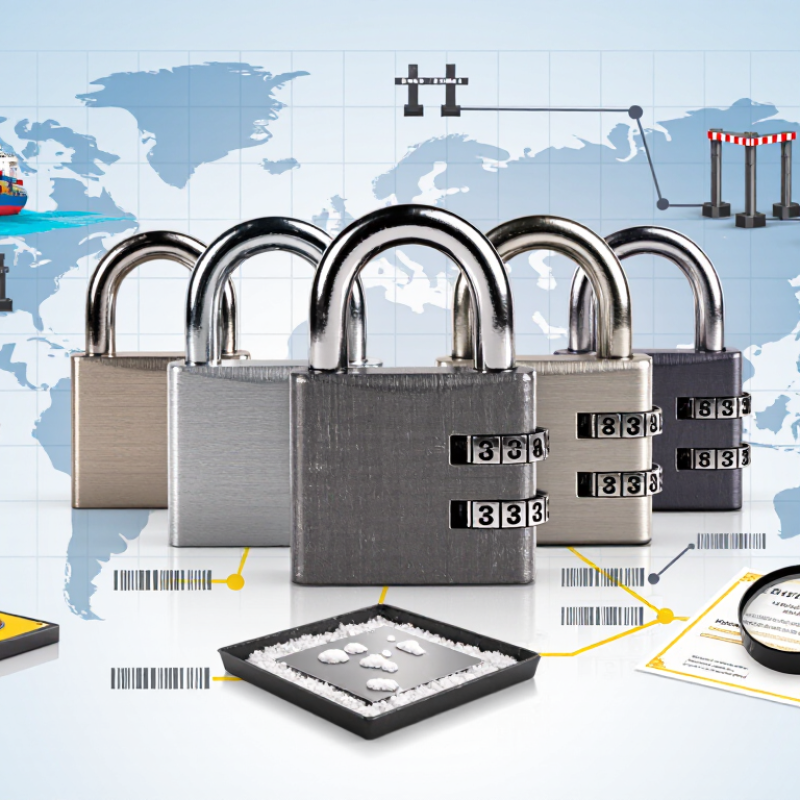
The World Bank’s Logistics Performance Index 2023 shows that customs, infrastructure, tracking, and delivery reliability strongly influence international supply-chain performance. The UNCTAD Review of Maritime Transport also reports that more than 80% of global merchandise trade by volume moves by sea. A Pull Lock may therefore spend weeks inside humid containers before reaching its destination. Material certificates, sample testing, packaging protection, and batch traceability deserve attention. They are not exciting. They prevent expensive surprises.
Supply-chain expert Martin Christopher wrote, “Supply chains compete, not companies.” His observation applies directly to Pull Lock sourcing. A low-cost component can still create delays through inconsistent dimensions, failed inspections, or weak after-sales support. ISO-related quality systems, independent testing, and clearly documented tolerances can improve supplier evaluation, although certification alone never proves product performance. That point is easy to forget. I have also learned that perfect sourcing formulas rarely exist; buyer forecasts, port conditions, and supplier capacity can change quickly. The practical goal is a defensible decision based on verified samples, total landed cost, risk visibility, and honest communication. This guide explains how to compare Pull Lock suppliers, specifications, testing evidence, and delivery capabilities across global markets.
What Is a Pull Lock and Where Is It Used?
A pull lock is a compact fastening device that secures a panel, door, drawer, or case with a pulling action. The user pulls a handle, tab, or lever to release the mechanism. Many designs combine a latch with a spring, catch, or rotating hook. It looks simple. However, its internal movement determines safety, durability, and ease of use.
Pull locks are common on equipment cabinets, tool cases, luggage, storage boxes, and removable machine panels. They are also used where vibration may loosen an ordinary catch. In a workshop, a good pull lock should close firmly without forcing the panel. The handle should remain comfortable after repeated operation. Stainless steel suits humid environments, while coated steel or zinc alloy may reduce cost. Plastic components can work well, but heat and impact resistance require careful checking.
When sourcing globally, request dimensional drawings, material details, surface treatment, load ratings, and cycle-test data. Do not rely only on product photographs. Confirm the mounting hole pattern, panel thickness, locking direction, and available key or tool operation. A supplier may call a compression latch a pull lock, creating confusion during sampling. I have seen small naming differences cause incorrect prototypes and delayed production. A physical sample, fit test, and written inspection standard usually prevent this problem. The best choice depends on the application, not simply the lowest unit price.
Which Pull Lock Specifications Match Your Application?
Choosing a pull lock begins with the application, not the appearance.
Measure the panel thickness, mounting cutout, door overlap, and available rear clearance. A lock that fits a 1.5 mm panel may fail on a 3 mm enclosure. Check the cam length and rotation angle carefully. Small differences can prevent full engagement.
Environmental data matters during global sourcing.
UNCTAD’s Review of Maritime Transport 2023 reports that over 80% of global merchandise trade by volume moves by sea. Salt air, condensation, and vibration can therefore affect hardware before installation. For coastal or outdoor equipment, request corrosion-test evidence aligned with ISO 9227. Stainless steel may help, but material grade alone does not prove durability. Surface treatment, fasteners, and seal design also matter.
Match the lock’s protection level to the enclosure.
IEC 60529 defines IP ratings, but the complete assembly must support the claimed rating. Ask for operating-temperature limits, water-ingress results, and cycle-test data. For frequent access, verify the tested operating cycles rather than accepting a vague “heavy-duty” description. For security-sensitive cabinets, compare key control, cam strength, and forced-entry test methods. Be realistic about load assumptions. A lock may secure a door without supporting its weight. I would also request samples from different production batches; this step is often skipped, and dimensional variation can create costly assembly problems.
How to Evaluate Costs, Compliance, and Global Shipping Requirements
How to Choose the Right Pull Lock for Global Sourcing?
Choosing a pull lock for global sourcing requires more than comparing unit prices. During supplier reviews, check the material, load rating, finish, and production tolerance. A low quote can hide tooling charges, inspection fees, or costly replacement orders. Ask for a complete landed-cost estimate. It should include packaging, inland transport, duties, insurance, and port handling. Request samples from the same production line, not only polished showroom pieces. That detail matters. Still, cost models are never perfect. Currency changes and shipping delays can disturb careful forecasts.
Compliance begins with the destination market’s safety, material, labeling, and documentation requirements. Keep test reports, declarations, batch records, and supplier inspection results together. For international shipping, verify product dimensions, carton strength, moisture protection, and stacking limits. A compact metal component can still damage cartons when packed poorly. Confirm tariff classification with a qualified customs professional. Do not guess. Also clarify whether the supplier or buyer handles export documents, customs communication, and delivery appointments. These details prevent unexpected storage fees and missed production schedules.
Tips: Compare suppliers using the same specification sheet. Test corrosion resistance before approving large quantities. Ask for photos of packed cartons. Leave a small budget for rework, because the first shipment may reveal weaknesses that samples do not.
How to Choose the Right Pull Lock for Global Sourcing?
Evaluation priorities for comparing pull locks across cost, compliance, and global shipping requirements.
The weighted index uses a 100-point purchasing model: landed cost 40%, compliance readiness 30%, and shipping suitability 30%. Higher scores indicate stronger sourcing suitability. Always confirm material declarations, applicable chemical regulations, packaging details, carton dimensions, and final freight quotations with the supplier before ordering.

 Rod lock