Choosing the right Flat Lock sewing machine can shape garment quality, production speed, and operator comfort. A suitable machine creates flat, flexible seams that feel smooth against the skin. It must also handle the fabrics used in your workshop, from lightweight sportswear knits to thicker fleece. The wrong choice may cause skipped stitches, fabric stretching, or uneven seam width.
Start with the garment’s construction requirements. Examine the stitch type, seam appearance, thread count, and required production volume. A machine designed for decorative flat seams may not perform well on heavy materials. Check its differential feed, presser-foot clearance, needle system, and adjustment range. These details matter when sewing curved hems, elastic panels, or layered fabric edges. Small settings can change the final result.
Think beyond the machine’s catalog specifications. Ask whether local technicians can service it and whether replacement parts are readily available. Test the machine with your actual fabric, thread, and seam design before purchasing. Listen for unusual vibration. Watch the underside of the seam. It should remain balanced after several passes.
A respected manufacturer can provide useful documentation, training, and consistent quality control, but brand reputation alone is not enough. Operator experience also matters. A skilled sewer may achieve reliable results from a simpler model, while a beginner may need clearer controls and stronger support. I have found that purchase decisions sometimes focus too heavily on speed. That can be a mistake. Comfort, maintenance access, and long-term stitch consistency often deserve equal attention. This guide explores the practical factors behind a confident Flat Lock machine choice.
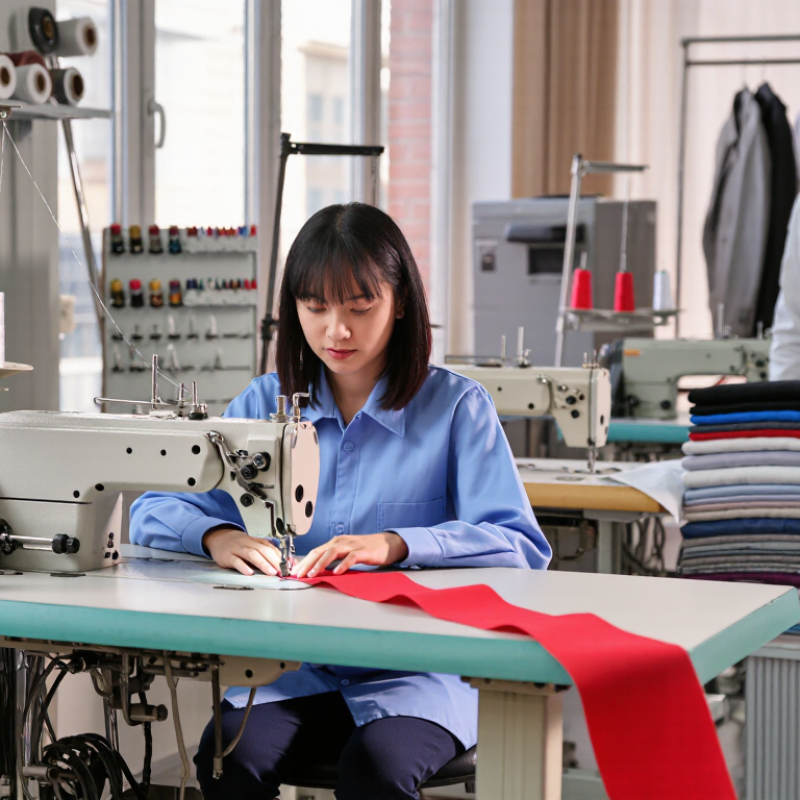
Choosing a flat lock sewing machine begins with the work you actually plan to produce, not the machine’s feature list. A sample room for yoga tops needs different performance from a workshop making fleece sweatshirts. For close-fitting activewear, examine how smoothly the machine handles four-way stretch fabric and elastic seams. You need stable thread tension, clean trimming, and a seam that recovers after stretching. Test it. Sew a curved side seam, waistband, and underarm section before deciding.
For underwear, swimwear, and lightweight jerseys, a narrow, soft seam may matter more than maximum sewing speed. A wider flat seam can suit sportswear, base layers, and garments worn next to the skin. If your projects include rib knit, mesh, or brushed fleece, bring actual fabric samples to the test. Layer thickness changes feeding behavior, especially where a hem crosses a seam. I once tested a machine on single jersey and judged it too quickly. It struggled later with a bulky fleece join. That mistake taught me to test fabric transitions, not isolated swatches.
Check the needle configuration, seam width, differential feed, and thread capacity against your production habits. Operators should also assess noise, visibility, adjustment access, and cleaning time during a realistic sewing session. A machine that creates beautiful samples but demands constant correction may slow a small workshop. Record skipped stitches, waviness, thread breakage, and recovery after washing. Wash-test the finished seam. This step is easy to neglect. Your fabric mix may change over time, so leave room for adjustment rather than choosing only for today’s easiest project.
Identify the sewing projects and fabrics you will handle before selecting machine capacity, feed control, and needle configuration.
The chart compares representative fabric-weight midpoints. Lightweight jersey and performance knits typically require precise differential-feed control, while rib knit, fleece, and other heavier materials may require stronger feeding, suitable needle systems, and greater clearance for layered seams. Always test the actual fabric, seam construction, and thread before final machine selection.
Choosing a flat lock sewing machine starts with the stitch type, not the machine’s appearance. A two-thread flatlock creates a light, flexible seam for activewear and fine knits. Three-thread versions offer more coverage and better stability. Four-thread configurations provide stronger joining seams for medium-weight fabrics. Test each stitch on your actual material. A sample made on cotton may behave differently on stretch nylon.
Machine configuration also affects production quality. Select the needle gauge according to seam width and garment design. A narrow gauge suits close-fitting sportswear, while a wider gauge can improve strength on heavier knits. Differential feed helps control stretching, rippling, and uneven edges. Check whether the machine supports the thread size, presser-foot pressure, and stitch adjustments you regularly need. Practical experience matters here. A technically advanced setup can still disappoint when its controls feel difficult to adjust.
Tips: Use matching fabric scraps, wash the samples, and stretch them repeatedly. Inspect skipped stitches, loose loops, and seam recovery. Keep notes for every setting. Small details matter. Do not trust one test only. I once judged a seam too quickly, then found it twisting after laundering. That mistake changed my process. Choose a configuration that remains stable during real garment use, not merely one that looks neat under factory lighting.
Choosing the right flat lock sewing machine starts with matching features to your daily production needs. Check the available stitch types, seam width, needle positions, and differential feed. These details affect stretch, comfort, and fabric control. A machine with clear threading paths can save time during busy shifts.
Speed matters, but maximum speed is not everything. A fast machine may struggle with slippery knit fabric or delicate athletic wear. Look for adjustable speed control and a responsive foot pedal. During testing, sew both slow curves and long straight seams. Watch for skipped stitches, uneven tension, or fabric gathering. These small faults become expensive when repeated across hundreds of garments.
Ease of operation also protects consistency. An adjustable presser foot, built-in lighting, and accessible tension controls help new operators work with fewer interruptions. A stable table reduces vibration, especially at higher speeds. Ask whether routine cleaning and lubrication are simple enough for your staff. I prefer machines that allow quick adjustments without special tools. That preference is practical, though not universal. Some experienced operators may value raw speed more than convenience. Test the machine with your actual fabric, thread, and seam design before deciding. A short trial can reveal more than a polished specification sheet.
| Machine Profile | Best For | Typical Stitch Types | Needle Configuration | Maximum Sewing Speed | Material Range | Key Features | Ease of Operation | Typical Power Requirement | Recommended Choice |
|---|---|---|---|---|---|---|---|---|---|
| Entry-Level Flat Lock | Home sewing, alterations, samples, and occasional garment production | Two-needle cover stitch, three-needle cover stitch, and chain stitch | 1–3 needles with 1–2 loopers | Up to 1,200 stitches per minute | Light to medium-weight knits, jersey, cotton blends, and stretch fabrics | Manual tension controls, basic differential feed, adjustable presser-foot pressure, and compact construction | ★★★★☆ Simple controls and easy threading, but more manual adjustment may be required |
Approximately 90–150 W | Choose for low-volume work and a limited budget |
| Standard Industrial Flat Lock | Small workshops, uniform production, and regular apparel manufacturing | Two-needle and three-needle cover stitch, bottom cover stitch, and chain stitch | 2–3 needles with multiple looper options | Up to 1,500 stitches per minute | Light to medium-weight knitted fabrics, ribbing, fleece, and activewear materials | Differential feed, adjustable stitch length, built-in safety mechanisms, direct-drive motor compatibility, and replaceable folders | ★★★★☆ Reliable operation with moderate setup and adjustment requirements |
Approximately 250–400 W | Best balance of speed, flexibility, and operating cost |
| High-Speed Industrial Flat Lock | Continuous production lines and high-volume knitwear manufacturing | Cover stitch, chain stitch, hemming stitch, and decorative flat-lock variations | 2–3 needles with specialized looper assemblies | Up to 6,000 stitches per minute | Light to medium-weight stretch fabrics and production-grade knit materials | Heavy-duty frame, centralized lubrication, automatic thread trimming options, high-speed direct drive, and production-specific attachments | ★★★☆☆ Fast and consistent, but requires trained operators and precise setup |
Approximately 400–750 W | Choose when output volume and cycle time are the main priorities |
| Programmable Flat Lock | Fashion production, technical garments, and repeatable decorative stitching | Cover stitch, chain stitch, programmed tack patterns, and selected decorative seams | 2–3 needles with electronically controlled functions | Up to 2,500 stitches per minute | Light to medium-weight knits, performance fabrics, and layered stretch materials | Digital speed control, programmable stitch patterns, automatic thread trimming, presser-foot lift options, and error indicators | ★★★★☆ Easy for repeat jobs after programming, with a longer learning curve initially |
Approximately 300–600 W | Choose for consistency, repeat orders, and reduced operator variation |
| Heavy-Duty Flat Lock | Workwear, sportswear, denim details, and garments with thicker seam areas | Reinforced cover stitch, chain stitch, and heavy seam constructions | 2–3 needles with reinforced needle and looper systems | Up to 1,200 stitches per minute | Medium-weight fabrics, layered knits, fleece, and selected heavier textiles | High-torque motor, stronger feed mechanism, larger working clearance, reinforced needle bar, and durable presser-foot system | ★★★☆☆ Stable on thicker materials, but slower to set up and more demanding to maintain |
Approximately 400–800 W | Choose when seam strength and material handling matter more than speed |
| Selection tip: Maximum speed is a machine capability rather than a guaranteed production rate. Actual output depends on fabric thickness, stitch length, operator skill, thread type, attachments, maintenance, and the complexity of the sewing operation. | |||||||||
Durability should be judged beyond a machine’s metal frame. Check the needle bar, loopers, feed mechanism, and presser foot for solid movement. A stable machine should produce even stitches during a long fabric test. Test lightweight knits and heavier layers before making a decision. Small vibration can become serious fatigue during an eight-hour shift. I once underestimated table stability, and uneven seams appeared after continuous operation.
Maintenance affects both output and operating cost. Choose a machine with accessible cleaning points and clear adjustment instructions. Remove lint around the looper area after each production session. Follow the recommended lubrication schedule, even when the machine seems quiet. Inspect needles, thread paths, belts, and screws regularly. Replacement parts should be available through dependable service channels. Complicated access can turn a simple repair into unwanted downtime.
Workplace conditions also shape the right choice. Measure the table area, power supply, lighting, and operator clearance. Consider the fabrics, seam width, stitch speed, and daily production volume. A powerful machine may be unsuitable for a small workshop with limited training. Noise matters when several machines run nearby. Safety guards and stable foot controls deserve practical attention. Ask an operator to test the machine, not only a manager. Preferences vary, and my first choice is not always the best fit. A short trial can reveal awkward controls, poor visibility, or tiring posture.
Choosing the right flat lock sewing machine requires more than comparing purchase prices. In my workshop experience, a low-cost machine can become expensive when its basic setup struggles with different fabrics. Test it with the materials you actually sew, including lightweight jersey, fleece, and layered seams. Listen for uneven stitching and watch the thread tension. Small defects often become costly rework.
Accessories strongly influence long-term value. Check whether the machine includes suitable needles, presser feet, thread guides, and a reliable instruction manual. A differential-feed adjustment is especially useful for preventing stretched or wavy seams. Extra folders and guides may improve productivity, but only buy them for real production needs. Unused accessories occupy space and increase the final cost. That mistake is common.
Maintenance access matters just as much. A machine with clear oil points, replaceable parts, and practical service support can reduce downtime over several years. Ask about routine cleaning, lubrication intervals, and technician availability before paying. Noise, vibration, and operator comfort also deserve attention during a hands-on trial. They affect daily output more than a polished specification sheet.
Long-term value is not always predictable. A more expensive machine may offer better stability, but it may not suit a small workshop with limited production. Calculate the cost of needles, lubricants, spare parts, electricity, and maintenance. Leave room for mistakes in your budget. I once underestimated adjustment time, and the machine looked less economical than expected. Reliable results matter, but the best choice still depends on workload, fabric range, and operator skill.