China Top Pull Lock Manufacturers What Buyers Need to Know?
China Top Pull Lock Manufacturers: What Buyers Need to Know?
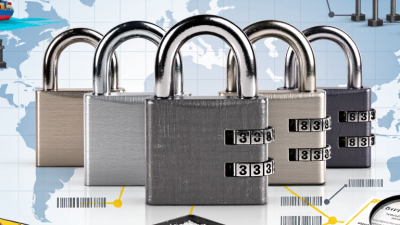
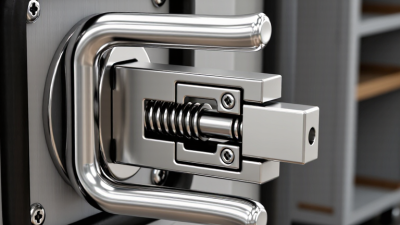
Choosing a Pull Lock from China requires more than comparing catalog prices. A polished product photo cannot reveal weak springs, uneven plating, or loose mounting holes. Buyers should examine alloy grades, locking performance, surface treatment, and production consistency. A cabinet latch may look simple, yet a small dimensional error can prevent smooth closing.
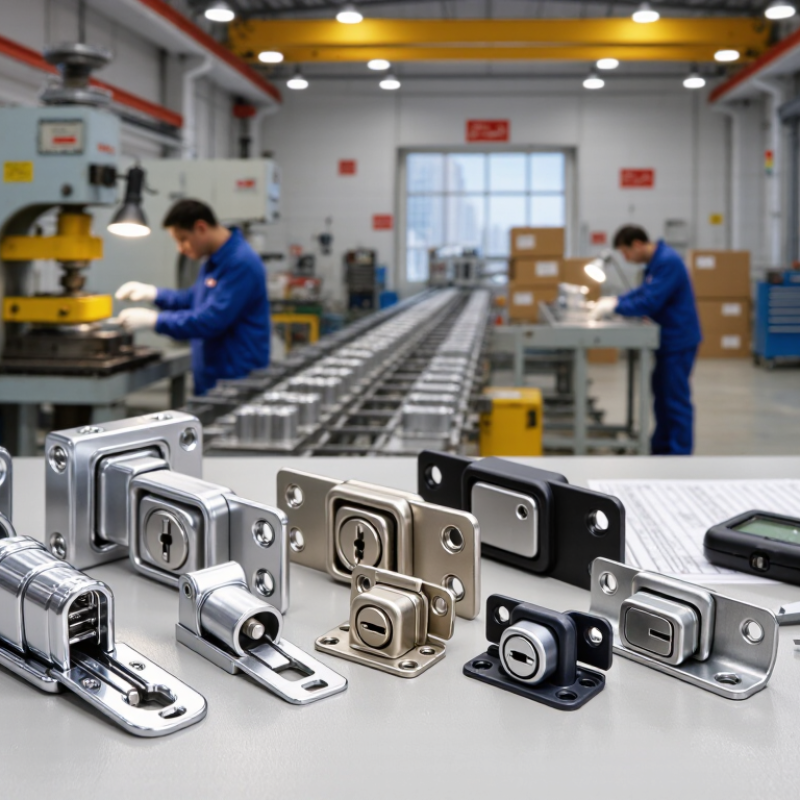
Mark Liu, an independent industrial hardware sourcing consultant, explains, “A reliable Pull Lock begins with clear specifications, not the lowest quotation.” His point deserves attention. Serious manufacturers should provide material details, CAD drawings, sample approvals, and inspection records. Buyers can also request photos of stamping lines, assembly stations, and finished packaging. These details often expose operational differences.
Factory experience matters. Ask whether the supplier produces standard models or supports custom sizes, finishes, and logo applications. Confirm minimum order quantities, lead times, replacement policies, and communication procedures. A supplier that answers vaguely may create avoidable delays later. That is not always a failure, but it is a warning.
Testing should match the application. A Pull Lock used on a tool cabinet faces different demands from one installed on a vehicle compartment. Check cycle testing, corrosion resistance, key function, and installation tolerance. Request samples before approving mass production. Measure them yourself.
The word “top” can mislead. Some large manufacturers may still offer inconsistent batches. Smaller factories may provide better attention, but limited capacity can become a problem. Buyers should balance price, evidence, responsiveness, and long-term support. This article outline explores those decisions with practical questions, realistic risks, and details worth verifying before placing an order.
Classify Pull Locks by 304/316 Stainless Steel, Zinc Alloy, and Load Ratings
Pull locks are not interchangeable, even when their shapes look similar.
Material and load rating should guide the buying decision. In workshop inspections, 304 stainless steel performs well for indoor equipment, cabinets, and ordinary moisture. It offers good strength and a clean surface. However, it may show staining near saltwater or chemical exposure. 316 stainless steel contains added molybdenum, improving resistance in coastal, marine, and harsh industrial environments. It usually costs more.
Zinc alloy pull locks suit lighter enclosures, furniture, and controlled indoor conditions. They can provide accurate casting and attractive finishes at a practical price. Yet surface plating may wear around the handle or latch after repeated use. Check the substrate, finish thickness, and moving parts. A polished appearance is not proof of long service life.
Load ratings need careful reading.
Some suppliers state a static pull force, while others report a working load during repeated operation. These values are not equal. Ask for test conditions, safety factors, mounting direction, and cycle data. A lock rated at 500 newtons may perform differently on thin sheet metal. The panel can deform first. Use reinforced mounting points and suitable fasteners. I have seen buyers select strong hardware but overlook weak doors. That mistake is easy to repeat. Salt spray testing, dimensional checks, and sample fitting provide more reliable evidence than a product photograph. Test it in your actual environment.
Compare MOQ, 15–30-Day Lead Times, Tooling Fees, and Sample Policies
When evaluating China pull lock manufacturers, buyers should compare the full purchasing structure, not only the unit price.
A practical RFQ should show MOQ by finish, color, and size. Common starting quantities range from 500 to 5,000 pieces, depending on molding and plating requirements.
A 15–30-day lead time may cover production only. It may exclude sampling, tooling approval, inspection, and sea freight.
UNCTAD’s Review of Maritime Transport 2023 states that over 80% of global merchandise trade by volume moves by sea, so shipping schedules deserve careful review.
Tooling fees need separate clarification.
Ask whether the mold is new, reusable, or shared across similar pull locks. Request ownership terms and replacement costs in writing.
Sample policies also differ. Some factories offer standard samples, while custom samples may require payment and courier charges.
A reliable supplier should provide dimensional drawings, material details, surface-finish references, and a sample approval record.
The American Society for Quality emphasizes documented specifications and controlled inspection in consistent manufacturing. That principle matters here.
Do not trust “fast delivery” alone.
Ask for the production calendar. A 20-day promise can become 35 days after revisions.
I have seen buyers focus too heavily on MOQ and miss tooling delays. That is an expensive oversight.
Compare total landed cost, rejection procedures, packaging, and payment stages before choosing a manufacturer.
Supplier claims still need verification through samples, factory evidence, and independent inspection.
Review HS Codes, Incoterms, Factory Audits, and 30–90-Day Warranty Terms
China Top Pull Lock Manufacturers: What Buyers Need to Know?
A reliable purchase starts with correct HS code research. Pull locks may fall under different hardware classifications, depending on their material, design, and main function. Never copy a code from an old invoice without checking. Ask the supplier for product specifications, drawings, and a proposed code. Then confirm the classification with a qualified customs broker. Small errors can delay clearance or change the landed cost.
Incoterms should appear clearly on the quotation and sales contract. FOB, CIF, and DDP place different responsibilities on the buyer and seller. Confirm who handles export clearance, insurance, inland delivery, and import taxes. I recommend comparing the factory address with the loading port. A low FOB price may hide extra trucking costs. That detail is easy to miss. Factory audits should review raw material records, machining tolerance, coating thickness, packaging tests, and final inspection reports. Ask to see recent production samples, not only showroom pieces. A short video call can reveal storage problems, though it cannot replace an onsite audit.
Warranty terms need practical wording. A 30-day warranty may cover visible defects, while a 90-day term may include early failures after installation. Define proof requirements, response time, replacement parts, and freight responsibility. Request batch photos and serial or carton references. Keep one sample from every approved shipment. It helps during disputes. I have found that vague phrases like “quality problem” create arguments later. Even careful buyers sometimes approve samples too quickly. A signed inspection checklist reduces that risk.

 Rod lock