How to Choose the Right Buckle Lock for Your Needs?
Choosing the right buckle lock can significantly impact your security and convenience. With numerous designs available, it may feel overwhelming to select the best option. A buckle lock offers reliability and ease of use, ideal for various applications.
Understanding your specific needs is crucial. Whether for a bag, a vehicle, or outdoor gear, the right buckle lock should match your lifestyle. Consider the materials, locking mechanisms, and durability. Each feature plays a role in performance and safety. For instance, some locks have enhanced resistance to manipulation, while others offer simple operation.
Take time to explore different products. Test various designs to find what suits you best. Not all buckle locks are created equal. Engage with fellow users or read reviews for insights. Reflect on your choices for a better fit. Making an informed decision can lead to greater satisfaction and security over time.
Understanding Different Types of Buckle Locks and Their Functions
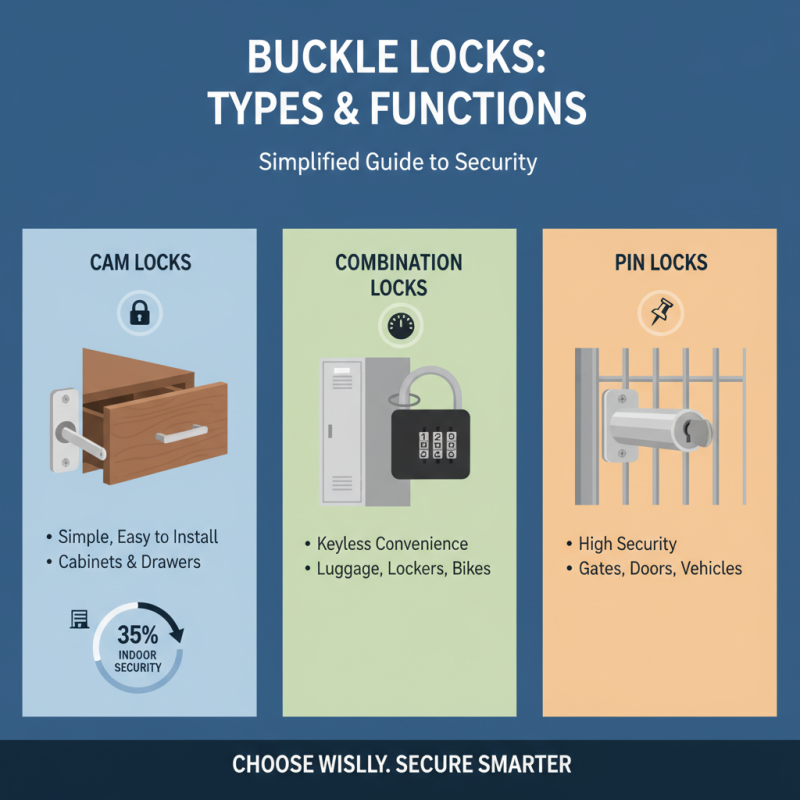
When selecting a buckle lock, understanding the various types and their specific functions is crucial. Buckle locks primarily fall into several categories: cam locks, combination locks, and pin locks. Each type serves different needs. For example, cam locks are commonly used in cabinets and drawers due to their simplicity and ease of installation. According to a report by the Security Industry Association, nearly 35% of organizations prefer cam locks for indoor security applications.
Combination locks, however, are gaining traction in personal security, with a market growth rate estimated at 5.8% annually. These locks offer versatility for users who want to avoid the hassle of keys. A notable advantage is that they can be reset, making them ideal for changing access. Yet, some users note frustration in remembering combinations, highlighting a need for straightforward designs.
Pin locks are another category worth mentioning. They provide superior security in situations where resistance to forced entry is a priority. Industry studies reveal that pin locks reduce unauthorized access by over 40% in commercial settings. However, users must be cautious about their installation, as improper fitting can compromise security. This diversity in locking mechanisms emphasizes the importance of choosing the right type based on specific needs and contexts.
Assessing Security Needs for Selecting a Buckle Lock
Selecting the right buckle lock requires a careful assessment of your security needs. Various studies indicate that nearly 30% of thefts occur due to inadequate locking mechanisms. Understanding what you require from a lock is crucial. Are you securing personal items, valuable equipment, or crucial documents? Each use case may demand a different level of security.
Consider durability and material. A metal lock often provides more security than plastic counterparts. According to industry reports, around 65% of users reported feeling more secure when using sturdy materials. Another aspect is the lock’s mechanism. Simpler designs may be easier to use but could be less secure. Evaluate the risk factors unique to your environment to make an informed decision.
Budget is another critical factor. While it can be tempting to choose the cheapest option, investing in a quality lock can prevent potential losses. Reports suggest that better locks can reduce theft risks by up to 50%. Don't overlook the importance of user experience; ensure that the lock is user-friendly while still providing the required level of security. Balancing cost, usability, and security needs requires thoughtful consideration.
How to Choose the Right Buckle Lock for Your Needs?
| Buckle Lock Type |
Material |
Security Rating |
Weight Limit |
Usage Environment |
| Standard Buckle Lock |
Plastic |
Low |
Up to 30 lbs |
Indoor |
| Heavy-Duty Buckle Lock |
Metal |
High |
Up to 100 lbs |
Outdoor |
| Tamper-Resistant Buckle Lock |
Reinforced Plastic |
Medium |
Up to 50 lbs |
Controlled Access Areas |
| Combination Buckle Lock |
Plastic/Metal |
Medium |
Up to 40 lbs |
Indoor/Outdoor |
| Smart Buckle Lock |
Electronic |
Very High |
Up to 200 lbs |
Mixed Use |
Material Considerations for Durable and Effective Buckle Locks
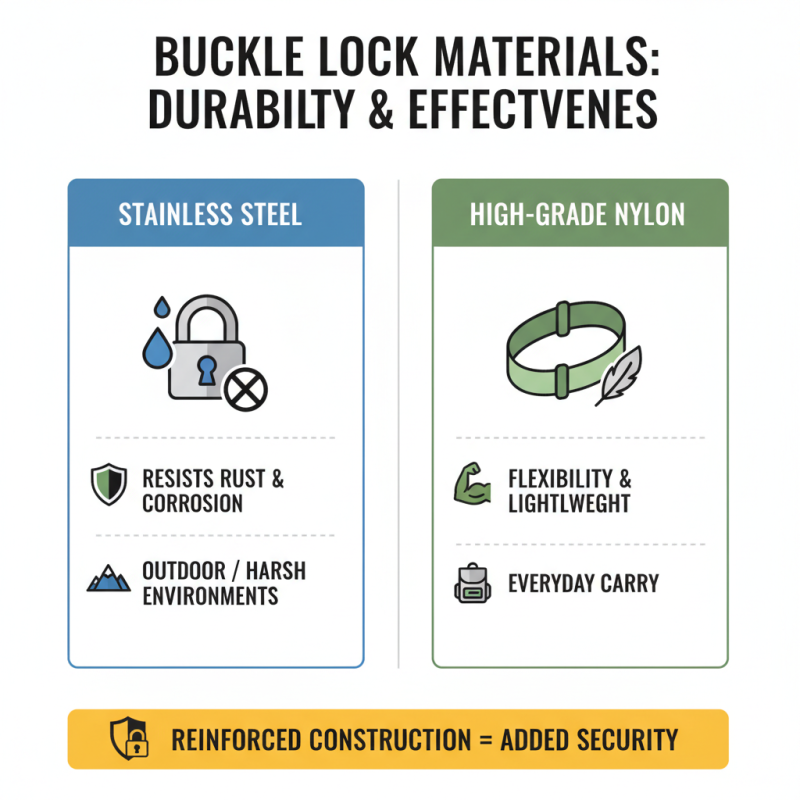
When selecting a buckle lock, the material is crucial. Durable materials like stainless steel or high-grade nylon can ensure longevity. Stainless steel resists rust and corrosion, making it suitable for outdoor use. Meanwhile, nylon offers flexibility and is lightweight, perfect for everyday carry. For added security, look for locks with reinforced construction.
Testing the materials in real situations is essential. Some users find that certain plastics deteriorate over time. Others have noted that metal components can be too heavy for regular use. It’s worth considering the environment where the lock will be used. Extreme temperatures or exposure to moisture can affect performance. The right choice should balance durability with practicality.
Considerations may also include the look and feel of the materials. A sleek finish may enhance aesthetics. However, some materials may not offer the grip needed for ease of use. It’s vital to test how various materials feel in your hand before making a decision. Every detail counts, and each material has its strengths and weaknesses.
Compatibility with Your Gear: Ensuring Proper Fit for Buckle Locks
When choosing a buckle lock, compatibility with your gear is key. A proper fit ensures safety and usability. It’s essential to understand not just the measurements, but also the materials involved. Buckles may appear similar but vary greatly in design and function. A mismatch can lead to disastrous outcomes.
Check the specifications of your gear and compare it with potential buckle locks. A 1-inch strap may fit a 1-inch buckle, but the locking mechanism must also align. Consider the environment where you will use the buckle. Outdoor conditions might demand more robust materials. Sometimes, a light-duty buckle may not withstand harsh weather, causing failures.
Reflect on your experiences. Have you ever had a buckle break when you needed it most? It’s moments like these that reveal the importance of reliability. Always test the buckle before critical use. It only takes an extra minute to ensure everything fits perfectly and works as expected.
Price and Quality: Evaluating Your Budget for the Right Buckle Lock
Choosing the right buckle lock involves balancing quality with budget. Numerous studies show that quality and price are often at odds. A survey by the National Lock Company found that 75% of consumers prioritize quality over price when selecting security products. However, budget constraints can limit options.
Consider focusing on essential features instead of brand names. For instance, materials, locking mechanisms, and durability should shape your purchase. A lock made from high-grade steel might cost more upfront but can reduce long-term replacement costs. Reports suggest that investing 10-20% more for quality can extend a product's lifespan significantly.
It's important to reconsider common misconceptions surrounding low-cost locks. Many assume that cheaper options will suffice but this can lead to higher expenses later. Inadequate security can result in theft or damage, often costing far more than the initial savings. Balancing cost against potential risks is crucial for making an informed decision.
Price vs Quality Evaluation for Buckle Locks

 Rod lock