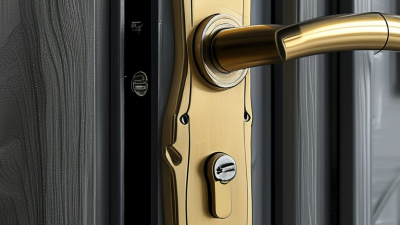
China Top 10 Lever Lock Manufacturers for Global Buyers
Choosing a Lever Lock supplier is not just a price comparison. For global buyers, the right manufacturer must deliver consistent machining, dependable materials, clear technical documentation, and steady production quality. A polished catalog helps, but it cannot show how a latch feels after thousands of cycles. Buyers should examine product drawings, finish options, test records, warranty terms, and sample units before committing to a large order.
Locksmith author A. C. Hobbs wrote about the practical craft of lock construction. In paraphrase, his enduring lesson is: “Judge a lock by its mechanism and workmanship, not its appearance alone.” That idea remains useful. Check whether the lever returns smoothly, the spindle fits securely, and the case shows clean, even finishing. Small details matter. A stiff handle or loose trim can become a costly complaint.
This guide introduces ten Chinese Lever Lock manufacturers for international buyers. It offers a starting point, not a substitute for due diligence. Compare each company’s product range, customization capacity, quality controls, communication, and export experience. Ask for recent inspection reports and confirm that stated specifications match the samples supplied. Also clarify packaging, lead times, spare parts, and after-sales support in writing. No checklist catches everything. Supplier claims deserve careful verification, and even a strong sample cannot guarantee every production run. The most useful shortlist balances technical evidence with responsive service—and leaves room for questions before an order is placed.
Understanding Lever Locks and Their Role in Global Security
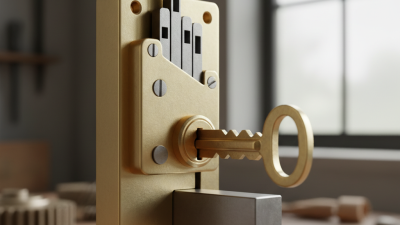
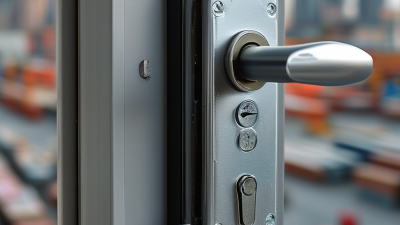
Lever locks secure doors through a lever-operated mechanism, allowing quick entry while keeping the latch engaged. Their value depends on more than the handle: lock case strength, bolt throw, strike-plate anchoring, and door-frame condition all matter. A solid lever lock fitted to a weak frame can offer less protection than buyers expect. ANSI/BHMA A156.2 sets performance requirements for bored and cylindrical locks, giving procurement teams a useful benchmark when comparing products.
The FBI’s 2023 Crime in the United States report estimated 847,522 burglary offenses in the United States. This figure describes one national market, not global risk, and it does not measure how many incidents locks prevent. Still, it highlights why buyers should assess locks as part of a wider security plan. Check tested performance, compatible door thickness, replacement-part availability, and local accessibility requirements. Standards differ between markets. One specification rarely tells the whole story.
Tips: Before ordering, confirm the lock’s handing, backset, and fire-door compatibility. Ask for independent test documentation, then inspect the frame and strike area on a sample installation. A neat handle is not proof of a secure fit.
How Lever Locks Are Designed and Manufactured in China
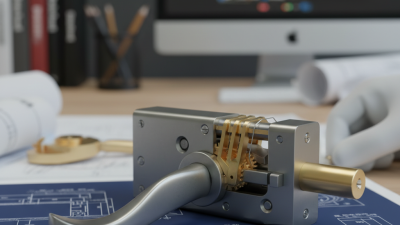
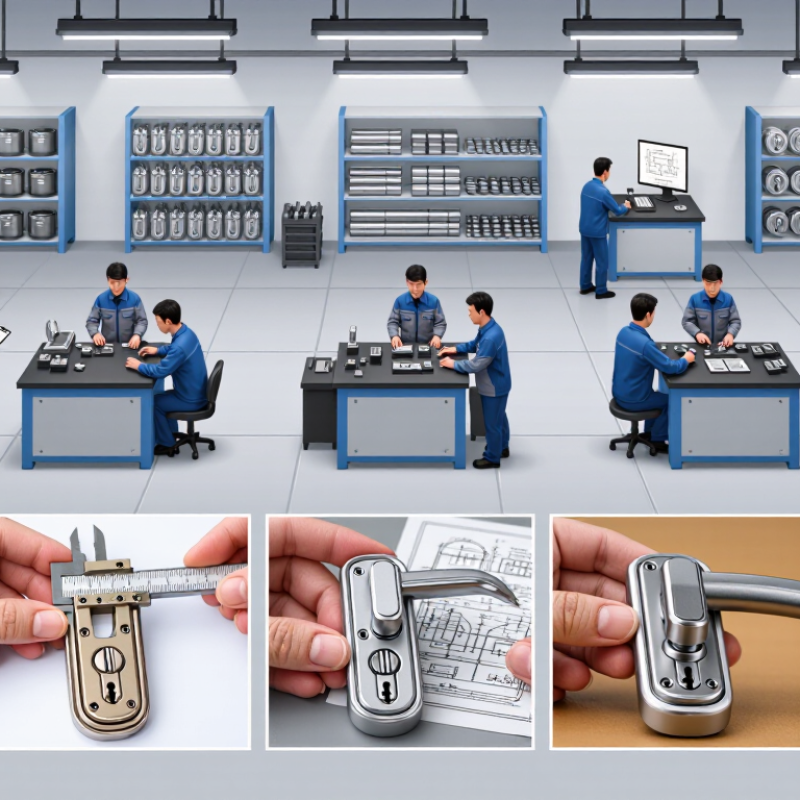
Designing a lever lock in China starts with how it will feel in the hand and fit the door. Engineers set the handle length, spindle position, latch travel, and spring force in CAD. A small change in spindle alignment can cause a stiff turn. Small details matter. Factories commonly use zinc alloy, stainless steel, or brass, depending on cost, finish, and intended use. Parts may be die-cast or stamped, then machined, polished, and coated before assembly. UNIDO’s International Yearbook of Industrial Statistics 2024 puts China’s share of global manufacturing value added at about 30%, reflecting a broad production base, not a guarantee of lock quality.
Quality checks should follow the product’s intended use. Inspectors can measure dimensions, test handle return and latch operation, and check finish adhesion. ISO 9227 provides salt-spray test methods for assessing corrosion resistance; buyers should agree on exposure time and acceptance criteria, since the method alone does not define a pass. ISO 2859-1 offers sampling procedures for lot inspection. Not every first sample is right. In practice, a loose spring or uneven coating may only become obvious after repeated cycling, so prototype testing and clear inspection records matter. Final checks should record test conditions, sample size, and any rework before shipment.
Criteria for Evaluating China’s Top Lever Lock Manufacturers
When evaluating a lever lock manufacturer, look beyond catalogue photos and compare repeatable product quality. Request several samples from different production batches. Check that the lever returns smoothly, the latch moves without sticking, and the finish has no sharp edges or visible bubbles. Small details matter. Ask for material specifications and documented cycle-test methods, including how failures are recorded. A test result is useful only when its conditions are clear.
Review the factory’s quality controls, not just its equipment. Ask how incoming components are checked, how dimensions are sampled during production, and what happens when a batch falls outside tolerance. Request recent inspection records where available. Also assess practical capacity: Can the supplier explain realistic lead times, sample revisions, packaging protection, and order changes? Clear answers are a good sign. A polished factory tour can still leave questions unanswered, so verify claims against samples and records. No single visit proves long-term consistency; keep that limitation in mind when comparing suppliers.
Profiles of 10 Chinese Lever Lock Manufacturers for Global Buyers
These profiles examine ten Chinese lever-lock manufacturers through practical buyer criteria: product range, material control, machining capacity, testing, and export support. Lever locks may look simple, but a loose spindle or uneven return spring can make a door feel unreliable. Buyers should check sample fit, cycle-test records, and finish consistency, not just catalog photographs.
Market context matters, but figures need careful reading. Grand View Research valued the global smart-lock market at US$2.69 billion in 2023 and projected a 19.6% compound annual growth rate from 2024 to 2030. That report covers electronic locks, not lever locks. Still, it shows how access products are changing and why some mechanical-lock suppliers also discuss compatible hardware and product integration.
The ten manufacturer profiles highlight different strengths, such as zinc-alloy casting, stainless-steel components, custom finishes, or support for volume orders. They also flag questions buyers should ask: Are dimensions checked against production samples? Can the factory provide traceable material specifications? Small details matter. A strong-looking handle can hide inconsistent tolerances, and a clear product sheet does not replace independent testing. These profiles offer a starting point, not a substitute for qualification checks.
How to Compare Suppliers, Certifications, and Export Support
When comparing lever lock suppliers, look beyond a polished catalogue. Ask for dimensional drawings, material grades, and sample units from the same production line. Check lever return, key movement, and finish consistency across several pieces. A smooth sample is useful, but it cannot prove every production batch will match. Small differences matter.
Review certificates and test reports carefully. Confirm the issuing body, test date, product model, and covered materials. A certificate for one component may not apply to the complete lock. For exposed installations, request corrosion-test details and inspect how the finish holds up around edges and screw holes. If documents seem vague, ask the supplier to clarify them in writing. That extra step can feel slow.
Export support deserves equal attention. Confirm carton dimensions, protective packing, minimum order quantities, production lead times, and which shipping documents the supplier can provide. Ask how damaged goods or specification changes are handled, and request a written sample approval before mass production. Clear answers are a good sign. Still, no checklist removes all risk; retain a few production samples and compare them with the approved unit when shipments arrive.

 Rod lock