Leave Your Message

2026 Best Sliding Lock Suppliers for Global Buyers

Choosing a Sliding Lock supplier in 2026 is not just a catalog exercise. Buyers must compare materials, operating feel, test evidence, and production consistency. A latch that glides smoothly on a showroom sample may bind after repeated use. Small details matter.

The broader market offers useful context, but not a direct measure of sliding locks. Grand View Research valued the global smart lock market at USD 2.9 billion in 2023 and projected a 19.6% compound annual growth rate from 2024 to 2030. That estimate covers smart locks generally, not sliding locks alone. It signals growing interest in access technology, while leaving conventional hardware performance firmly in the buyer’s hands. Security technologist Bruce Schneier’s reminder, “Security is a process, not a product,” applies here as a general principle—not as a comment specifically about sliding locks.

For global buyers, supplier checks should reach beyond price and polished product photos. Ask for material specifications, cycle-test results, corrosion-test details, dimensional drawings, sample lead times, and batch traceability. Confirm how the supplier handles design changes and quality issues. A confident sales reply is helpful, but it is not test evidence. And one supplier may not fit every project. This guide compares leading Sliding Lock suppliers through practical criteria, while recognizing that published claims still need verification against samples and project requirements.
2026 Best Sliding Lock Suppliers for Global Buyers

What Sliding Locks Are and How They Work

A sliding lock secures a panel that moves sideways, such as a patio door or cabinet door. Unlike a hinged-door deadbolt, it usually works within a narrow frame. A thumbturn, key cylinder, or small lever moves a bolt or hook into a receiver fixed to the jamb. The panel stops moving when the bolt engages. The motion is simple.

But fit matters.

Common designs include surface-mounted bolts and mortise locks concealed inside the door stile. Hook bolts can resist the panel being pulled away from its frame, while a straight bolt relies more heavily on accurate alignment. A loose receiver, worn track, or small gap can weaken performance.

I would not judge security by bolt thickness alone. Check how the lock meets the frame, and whether the door can lift out of its track. Grand View Research valued the broader global smart-lock market at USD 2.73 billion in 2023 and forecast 19.6% annual growth from 2024 to 2030. That report concerns smart locks, not sliding locks specifically; it signals wider interest in access security, not proof that every sliding lock needs electronics.

Simpler can be better.
Types of Sliding Locks and Their Common Applications

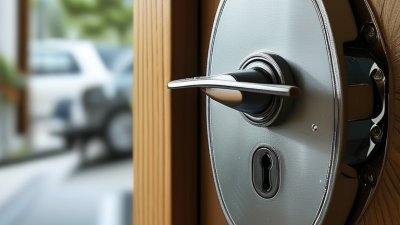
Sliding locks move a bolt or catch into a receiving point, making them useful where a compact, visible fastening is preferred. Surface-mounted slide bolts suit garden gates, utility doors, and storage cabinets. They are simple to inspect, but exposed screws may be a weak point if the door or frame is poorly made. Small barrel bolts also work on lightweight cupboard doors and window sashes, where they help prevent casual opening.

Mortise sliding bolts sit within a door edge, so they offer a neater profile for interior doors and furniture. Hook-style sliding locks engage a keeper and are often used on sliding doors or panels that need to resist being pulled apart. For a shed gate, measure the gap between the bolt and keeper before choosing a model. Even a few millimeters of misalignment can cause sticking. It sounds minor, but it matters.

Material and setting should guide selection. Stainless steel can help in damp or coastal conditions, while plated steel may suit dry indoor use. Check bolt travel, fastener size, and frame strength; a heavy lock on a flimsy panel is not automatically safer. For cabinets, a short bolt may be enough. For gates, look for a longer throw and a keeper that remains aligned as the wood shifts. I would not assume one lock fits every season or installation.

How to Evaluate Sliding Lock Suppliers for Global Purchasing

For sliding lock suppliers, evaluate the product and the evidence behind it. Request dimensioned drawings, material grades, coating specifications, and batch traceability. Ask for test reports stating the applied load, cycle count, and failure criteria. A polished certificate alone proves little. Compare samples against drawings, checking latch alignment, burrs, and smooth movement by hand.

The World Bank’s Logistics Performance Index 2023 reports that international shipments take an average of 44 days from export to import, with about 60% of that time spent at sea. Build realistic lead times into purchasing plans. Ask suppliers how they control production schedules, protect locks from moisture and abrasion, and report delays. UNCTAD’s Review of Maritime Transport 2024 notes that shipping carries over 80% of global merchandise trade by volume. Packaging and shipment documentation deserve close review.

Request a pre-production sample and inspect it under realistic installation conditions. Check whether the lock fits the intended door thickness and whether fasteners are included. Confirm minimum order quantities, spare-part availability, and how defects are handled. A supplier may answer every question well, yet performance can still vary between batches. That uncertainty is worth acknowledging. Keep written specifications and approval records, then compare delivered goods with the approved sample before scaling orders.

Leading Sliding Lock Suppliers to Consider in 2026

Leading Sliding Lock Suppliers to Consider in 2026

In 2026, global buyers should compare sliding lock suppliers by product fit, manufacturing consistency, and service—not catalog size alone. A supplier may offer compact cabinet bolts, heavy-duty gate locks, or adjustable models for different panel thicknesses. Check the stated dimensions against your drawings. A few millimeters can matter.

Ask for material specifications, finish details, and test information relevant to the intended environment. For coastal or humid locations, confirm how the finish resists corrosion; do not rely on appearance alone. Request samples from a production run, then check alignment, sliding force, and latch engagement. A polished catalog is not enough. Supplier claims need evidence.

Evaluate lead times, minimum order quantities, packaging, and the process for handling defects. Clear drawings and written tolerances help prevent disputes when parts arrive. It is tempting to choose the lowest quote, but a small price difference may not cover rework or delays. Still, supplier comparisons are rarely perfect: sample performance may not represent every batch. Ask how quality is monitored during production, and review the answer carefully. A measured choice beats a rushed one.

Comparing Supplier Capabilities, Compliance, and Delivery Options

For global buyers, sliding lock suppliers should be compared on more than unit price. A capable supplier can explain how lock geometry, alloy choice, and surface finish affect operation in the intended environment. Ask for evidence. Request sample units and drawings with dimensions, tolerances, and mounting details. A lock that slides smoothly on a clean bench may bind after dust, moisture, or repeated use. Testing conditions matter.

Compliance documents should match the product and destination market. Check material declarations, inspection records, and applicable test reports, then confirm that part numbers match the quotation. Requirements differ by market and application; avoid treating one certificate as universal proof. A test report should show what was tested and how. Documents should identify the tested model, not just a product family. This detail is easy to miss.

Delivery capability includes more than a promised lead time. Confirm sample timing, minimum order quantities, production capacity, packaging, and shipment terms in writing. For a trial order, ask how the supplier handles dimensional variation or a late inspection. A tidy spreadsheet can still hide weak follow-up. That matters. Some suppliers may offer excellent customization but limited stock, while others ship standard sizes faster. Buyers should weigh that trade-off against their installation schedule and keep a little room for delays.

2026 Best Sliding Lock Suppliers for Global Buyers - Comparing Supplier Capabilities, Compliance, and Delivery Options

This comparison uses supplier-type benchmarks rather than named companies or brands. Lead times and order quantities are indicative planning ranges, not guaranteed offers; confirm specifications, certifications, pricing, and shipping terms directly with each shortlisted supplier.

Supplier Type Typical Sliding Lock Products Engineering & Customization Indicative Minimum Order Indicative Production Lead Time Compliance Evidence to Request Common Delivery Options Best Fit for Buyers Points to Verify
Specialist lock manufacturer Sliding door and window locks, latches, keepers, and related hardware in defined product ranges. Usually offers established designs, finish choices, and some dimensional or component customization. Tooling may be needed for non-standard parts. Often low to medium for catalog items; custom parts may require higher quantities. Approximately 3–8 weeks for stocked or standard products; custom work may take longer. Current quality-management certificate, where claimed; material declarations; applicable test reports; REACH or RoHS documentation when relevant to the product and destination market. Courier or air freight for samples and urgent orders; sea freight for larger consignments; export packing and shipment documentation by agreement. Buyers seeking a focused product range, repeat orders, and access to lock-specific product knowledge. Confirm the exact lock application, dimensions, cycle or durability test method, finish specification, and whether certificates cover the manufacturing site and product scope.
Integrated hardware manufacturer Sliding locks alongside handles, hinges, window hardware, and other building or furniture fittings. May coordinate multiple components and finishes; customization is more practical when the requested item fits existing production processes. Low to medium for standard range items; medium or higher for coordinated custom programs. Approximately 4–10 weeks, depending on stock, finish, and production scheduling. Quality-system documentation; bills of materials or material declarations; relevant chemical-compliance statements; product-specific performance evidence if required by the project. Consolidated sea freight for mixed hardware orders; air or courier service for samples; destination delivery terms agreed in the quotation. Importers and project buyers consolidating several types of hardware into one purchase. Check that the sliding lock is tested and specified independently, rather than relying on documentation for a different product in the supplier’s range.
Precision metal-parts contract manufacturer Custom sliding bolts, catches, brackets, lock plates, and machined or stamped lock components. Strong potential for drawing-based production and material or process changes; product design responsibility and tooling ownership must be agreed in writing. Usually medium to high for production runs; prototypes or samples may be available at additional cost. Approximately 6–12 weeks for new tooling or custom production; repeat orders may be shorter. Material certificates or traceability records where specified; inspection reports; quality-system documentation; applicable chemical-compliance declarations for supplied materials and finishes. Courier or air freight for prototypes; sea freight or other agreed cargo service for production quantities. OEM buyers with technical drawings, custom geometry, or a need for controlled component production. Review tolerances, sampling and inspection plans, tooling charges, change control, surface-finish requirements, and responsibility for final assembly testing.
Regional distributor or stockist Catalog sliding locks and replacement hardware sourced from one or more manufacturers. Limited product modification; can often help identify compatible standard items and supply smaller quantities. Often low for stocked items; availability depends on local inventory and order policy. Same day to several weeks for in-stock products; special orders depend on the upstream manufacturer. Request manufacturer-issued declarations and test reports for the specific product; verify lot identification and the distributor’s authority to supply the goods. Local parcel or pallet delivery; cross-border courier or freight may be available depending on the distributor’s network. Maintenance buyers, small importers, and projects needing shorter replenishment routes or modest quantities. Confirm actual stock, country of origin, product version, warranty route, and whether compliance documents apply to the exact supplied item.
Custom metal fabricator Fabricated sliding bolts, brackets, locking plates, and simple assemblies made to drawings. Can adapt dimensions and fabrication details; suitability depends on equipment, tolerances, finishing capability, and assembly experience. Low to medium for straightforward fabricated parts; specialized finishes or setups can raise the minimum. Approximately 2–8 weeks for straightforward work; complex assemblies and new finishes may take longer. Process and material records as specified in the purchase order; inspection results; applicable material or chemical declarations for the finished product. Local truck or parcel service for nearby buyers; pallet, air, or sea freight for export orders by arrangement. Buyers needing simple custom parts, local sourcing, or short production runs. Confirm locking function, edge quality, corrosion protection, dimensional inspection, and whether the fabricator can validate the finished assembly.